*written in 2010
“I learned that sick children are not to be feared, but are to be loved.”
He was wearing a red soccer jersey. He was short, maybe four years old. He went straight to the easel, something few of the children did. He was surprisingly into his painting, using all of the colors and creating a picture that, if called abstract and modern, could probably sell on eBay for a few thousand dollars. His back was to me, but I could tell that he was a new patient in the hospital and so went over to talk to him. I knelt down by his side and said “sasa!” (“what’s up?” in Swahili). He turned to look at me, smiling. It looked as if a tennis ball had been forced underneath his skin where his eye should have been; you could no longer see the eyeball, but stretched around the mass were his eyelids, in which soft, black eyelashes still rested. He had retinoblastoma, a cancer in the eye which causes his eye to be very enlarged, infected, and painful. His name was Evans.
I was afraid of sick children.
Everywhere, all around us, we see the dreaded illness. TV shows and movies paint pictures in our mind of cruel hospital scenes, constant fear of death, patients gasping for their last breaths. Hospitals advertise for themselves by forcing pictures of pale, bald, wheezing, children with haunting looks in their eyes into our minds, our lives. When an organization wants money for hunger relief, they force images of the skinniest, weakest children onto us. When promoting AIDS treatment efforts, we aren’t shown the success stories but are shown images of two, three, four men, skin and bones, sharing a hospital bed and moaning in agony. We’re more likely to give money, to contribute to the cause at hand, if we’re given the worst-case scenario. When we see these terrifying, grotesque, extreme images of sickness, we’ll do anything to erase the sight that becomes engraved in our mind. The more we see them, the more we donate, thinking a little more money might mean we don’t have to look at the scary, haunting pictures any longer.
We become intrigued with the drama of illness, but only as long as we know that the sick, dying child isn’t real, is fictional. We want to watch more and more episodes that feature the intensities of hospitals, the drama of traumatic emergencies, the sadness and emotions around death – but only if we don’t actually have to face it for ourselves. We become addicted to and engulfed in the notion that any hospitalization, any illness, any slight cough is the road to doctors sprinting down hallways to save lives, nurses yelling “code blue,” families screaming in grief. So much so that we forget that there is also the reality of illness out there; we forget that children are fighting for their lives, are being mourned, even if not in the flashy way we have become accustomed to.
When we are faced with the task of looking at real patients, at watching real children struggle with sickness, we can’t get these images out of our head. Simply, they are sick children — nothing fancy, nothing worth documenting for a commercial. We are blinded by what we expect to see and are then torn between wanting to pay our way out of having to face them and wanting it to be more intense so that we can pretend it is media that we can pause, play, fast-forward, skip.
The children in the beds weren’t simply lying in their beds, ill but still children, they were lying in their beds, violently dying at a moment’s notice. As I stepped away from the hospital beds, I was not stepping away from the reality of their sickness but from the terrifying images that media and I myself had created. When I looked at the wards in Moi Hospital, my view was clouded. Somewhere, subliminally, I knew it wasn’t real.
We stood on the outside, seconds from stepping inside to this apparent terror. I squeezed her hand, and in we went. My mind was blocked by the screams. So many screams. So many cries. So many pleads. I tried to close my nose to the scent of burned flesh, but it slipped past, making my senses cringe, my skin prickle. I always thought the smell was a lie. It wasn’t a lie. The room was so small but yet seemed to be overflowing, about to burst. Everything seemed to be exaggerated. Even the smallest of burns oozed, bubbling and reddening as I flashed my eyes over it and away. Even the smallest of people were burned: on the operation table, a baby, raw, thrashing in discomfort. Even the strongest of people trembled as their nerves, exposed, became knives, continually slicing into them: on the bench next to me, a young man, every inch of his face burned, holding a toddler whimpering, all burned. Everywhere people – young, old, silent, yelling, collapsed, sturdy – burned. And then it was too much. I didn’t know where to look – at their burns? At the floor? In their eyes? We stumbled out. I was conditioned on the intensity of the burn unit before I first went: I knew people who fainted in there, I knew people who got sick in there, I knew people who vowed never to step foot in there. The daunting, intense sights were no longer fictional. This was real life and it was not an easy place to be.
As continually I went into the burn unit to visit with children or bring them to Sally Test, it began… Outside the door: take a breath. Opening the door: take a breath. Inside: take a breath. Look in their eyes. Smile. Breathe. Say hello. Breathe. Step outside. Close the door. Breathe. Breathe. It was my mantra, my routine. It was my shield, my barrier between me and that which I feared. It was my strategy for coping. It was my life jacket in an ocean in which I didn’t know how to swim.
I was afraid of sick children.
Once, I sat down at a table with kids who were playing a card game. A child asked me to hold his cards for him; I reached over to take the cards and, in doing so, bumped his IV port. The child, used to the pain, or possibly unable to feel the pain, did not react and yet I shivered, and asked another worker to come take my place. I went over to the bookshelf to steady myself, pretending to organize or alphabetize or search for a good read. I closed my eyes. I took a breath. I returned to the table, took the child’s cards, but kept as far away from their IV port as I possibly could.
Once, I walked into the post-surgery ward and found, suddenly, that I had walked into the doctors changing a boy’s leg bandage. I jolted, turned abruptly. I stumbled over broken Swahili with another patient until I was sure the doctors had finished and were gone before turning back to the boy. I glanced quickly down to his leg, saw it was covered, and didn’t look at it again for the rest of the day.
Once, a little girl whose whole scalp had been burned was on the playground and slid down the slide. The healing burn was now a crusty, scabbed mess of pus, dried blood, stretched skin. She slid too fast, so fast. She got to the ground and couldn’t stop herself, falling forward onto the concrete. Suddenly her mending, damaged head was broken open, blood pouring. She screamed, the workers swarmed her. I ran inside, found the first-aid kit, brought it to the nurses outside, then busied myself with other children. I just kept breathing.
So as I crouched next to the painting easel that day, I expected myself to shy away from Evans. I expected myself to be cautious. I expected myself to be weak. I expected myself to leave him to the other workers, too terrified to face him. I expected myself to be afraid of him. I couldn’t look him in the eyes; my routine had to be altered. I looked at Evans, at all of him, and saw a four-year-old painting at an easel. I saw a little kid, too short to reach the top of the paper, jumping up and down to coat the entire surface in color. I saw a child excited to paint, to create, to be a child.
And for some inexplicable, indefinable reason, I wasn’t afraid.
The other Americans there, mostly nurses and doctors, rushed over to Evans to gawk and take pictures. They said “oh, my god.” They said “aw.” They said “wow, look at him.” They said “I’ve never seen anything like it.” Evans was the Eiffel Tower, the Mona Lisa, a great tourist attraction of the medical world – something to document, to tell friends about. Without thinking I pulled him away from the medical vultures, who looked disappointed that this anomaly, this cancer treasure, was being taken from their healthy, untainted eyes.
I needed to protect him.
He didn’t like to play with the other kids or have his picture taken; he was conscious of his condition. This didn’t take away from Evans being joyous, excited, a child. He was a little firework, constantly running and jumping and quick to laugh. I could hardly keep up with him as he darted from swing-set to slide to see-saw. Over and over again, I told him my name was Callie. Over and over again, he called me “mzungu” (“white person” in Swahili). Every time, I laughed and said, “No, Evans, not mzungu. Callie. My name is Callie.” He’d grin and say “Okay, Callie” and then two seconds later he was asking “mzungu” to play tag with him. Evans, retinoblastoma or no retinoblastoma, was just a little kid.
That night, Evans got chemotherapy. The treatments, which affected him severely, weren’t working and his eye was growing more painful for him. Retinoblastoma never has a good prognosis; it is a mean, killing, horrible, cancer monster whenever it hits. When it reaches Evans’s stage, it is only a matter of time. When I walked into his ward the next morning to visit him, I found him in the arms of his favorite nurse, Caroline, his eyes closed in sadness. When I called his name, saying good-morning to him, he barely lifted his head from her shoulder and only fluttered his eyelids just enough to get a glimpse of me. So that Caroline could check on her other patients, I gently lifted Evans into my arms.
Before she left him, Caroline pressed a shilling into his palm, whispering to him that when he felt better, he could go to the store and buy himself a piece of candy. He nodded and clutched the shilling, only putting it down once during the day while he was drawing a picture. In that time, another child found his shilling and took it for his self. When Evans realized his precious, tiny amount of money was gone, he hung his head. I picked him up and held him in my arms, telling him I would get him another shilling. He simply closed his eyes and buried his face into my shoulder.
There we sat. All I could say was “pole, pole, pole” (“sorry” in Swahili). I spent much of the rest of that day sitting on the floor with Evans draped in my lap as he drifted in and out of sleep and sadness. He barely moved. It seemed hours, completely still. Beneath his weight, my legs fell asleep. My back ached, my neck hurt, I couldn’t feel my feet. Completely still I sat, not wanting to disturb his temporary peace. Breathe. Keep breathing.
After a while, Evans lifted his head and whispered, barely audible, “Baba.” I knew his father was all he had left, knew that he alone sat by his bedside each night. I knew his father was worried, knew that each time I saw him, his face looked more scared. I knew his father was struggling, knew that he had no way of paying the hospital bills that were quickly piling up. I knew his father had left the hospital that afternoon, knew he had gone into the city for the day to try to find work. “Baba,” he said again.
He tried to get up, to walk back to the wards in search of Baba, but was too weak. I knew his father wouldn’t be by his bed. Still I picked him up and carried him, limp against my chest, into the wards. Evans lifted himself, looked around. “Baba?” he searched. Defeated, saddened, alone, he fell back against me and said nothing as I slowly made my way back to Sally Test. Again, we sat.
The two pediatric procedure rooms are located on either side of Sally Test, surrounding the center. Often I saw children being led into the rooms by nurses, their legs shaking in fear. Often I saw children being carried from the rooms by nurses, their bodies limp and their faces resigned. Often I heard the screams. No anesthesia, no sedation, no pain medicines – just screams. The first time I heard it, I was sent into shock. I looked around, expecting everyone else to have frozen as I did. They continued on. Initially, I thought this was because they had all gotten used to the screams, were no longer bothered by their piercing. As the screams continued, seemingly constant throughout the days, I learned that they are impossible to get used to. Instead, you learn to shut them out. Otherwise, it is impossible to continue on.
There we sat. A sharp scream cut through the silence. Then another. A cry, a sob, a longer scream. Then again, this time from the other side, more yells, agony. I looked at the little boy in my arms. Part of me was utterly grateful that he wasn’t contributing to the screaming, that he wasn’t in that much pain. I was glad that at this moment, he was in a place where he could be quiet. Then, the other part of me became worried, anxious, terrified. This little boy in my arms wasn’t making any noise, he was peaceful. He was too quiet.
A soft flutter, a quiver of his chest. Then nothing. Panic hit me, and I sat there, silent, waiting. A soft flutter, a quiver of his chest. Panic, waiting. A soft flutter, a quiver of his chest. I was feeling the soft movements of his staggered breaths against my arms, afraid that suddenly, if I wasn’t paying close attention, they would stop. Breathe, Evans. Breathe. Keep breathing.
In that moment, as I began telling Evans to breathe rather than myself, I realized, simply, that I loved this child. I loved him despite his scary and difficult illness. I loved him despite knowing that his life was short. I loved him despite knowing that the realization of this love came from being so terrified of his death that I began commanding him to breathe. I loved him. Evans’s sickness didn’t take away from his need to be loved and it didn’t take away from his ability to be loved.
I no longer fear sick children. We breathe. We keep breathing.
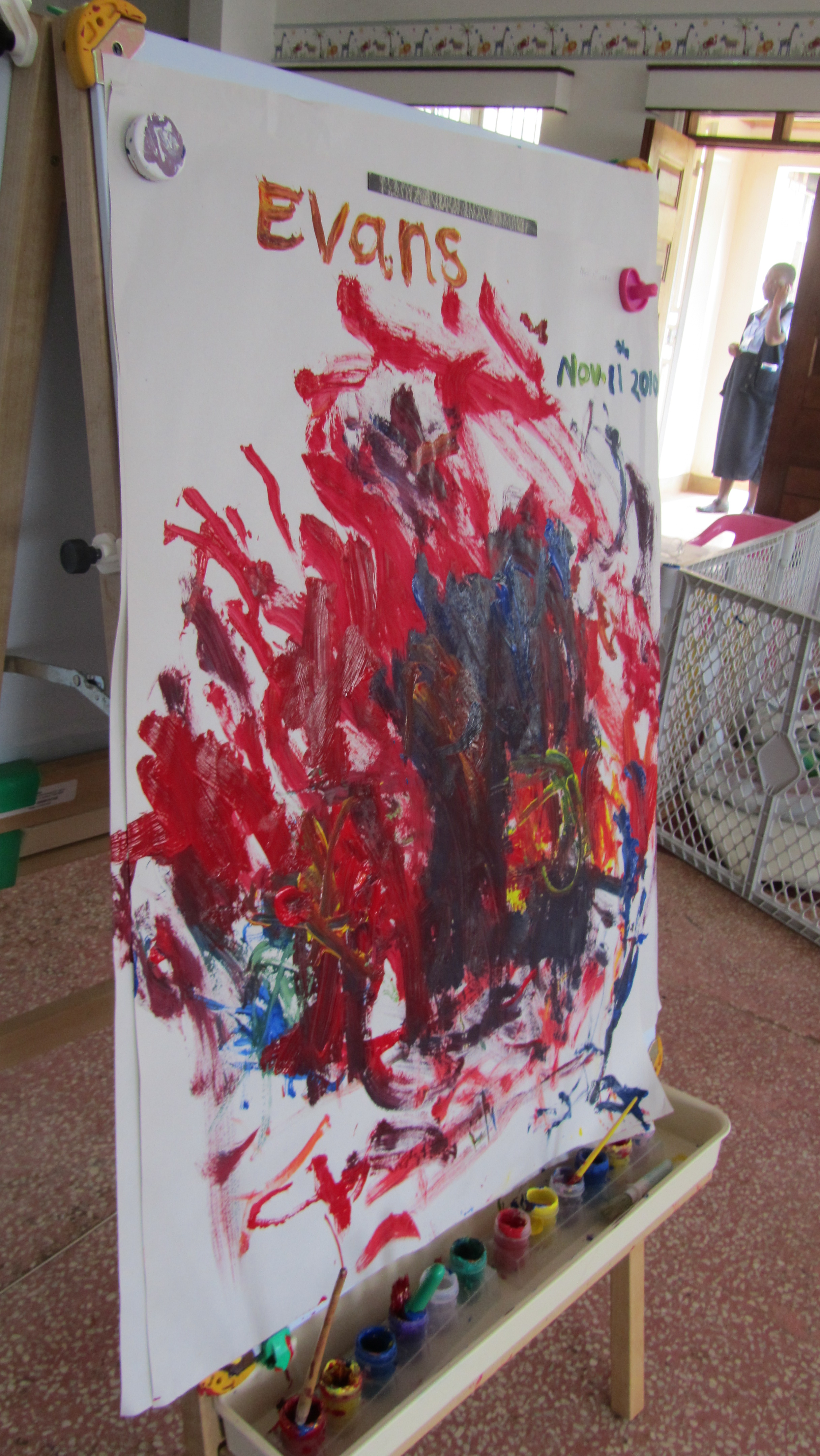
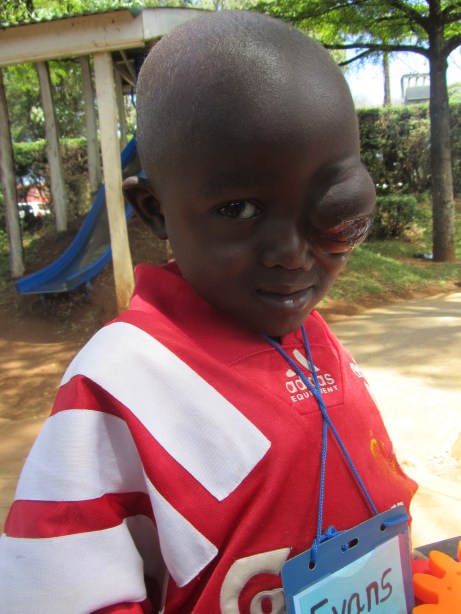
- Evans
 callie daniels-howell