I should be catching up on writing field notes, an activity that should be daily but always piles up by the end of the week as my energy wanes and my need to fill my post-hospital evenings with little acts of great care mounts. Today I find that while my task list has grown long, another note is beckoning to be written first, and I must heed its call.
I’ve been in Eldoret, Kenya for two months now. I could give a long, jargon-filled methodological description of my goings-on, but more or less what can be said is my time here is harrowing and sharply magical, the definition of ‘poignancy’ lived out loud. I currently spend my days in the paediatric oncology ward of Moi Teaching and Referral Hospital, walking alongside the children and family of the unit as they experience this acute edge of human life through diagnosis, treatments, set-backs and celebrations, little moments of levity and frequent death. While it is the lattermost aspect on which my research officially focuses, on that imprecise space between life and death and what is desired in the end, it is capturing the culmination of it all that feels especially critical.
Several years ago, after a summer spent in this same hospital, during which I loved deeply and witnessed great loss, I wrote a poem called Things That Appear Broken But Upon Closer Inspection Are Beautiful. When people read it, I’m frequently told they don’t get it. They don’t see anything beautiful in that list. All they see is broken, pain, the worst of life and humanity. It is almost an affront, it seems, to name beautiful in the midst of horrible.
When I describe my research and daily life, the reactions I receive and questions I am asked seem to come from a similar sense of seeing only that which appears broken. The most frequent and usually very first question I receive is how I manage to cope with something so sad, how I take care of myself through what is imagined to be fully painful and nothing else, what I do outside of the hospital that allows me to undertake an endeavour where my primary purpose is to listen to, take in, and hold the moments of a child’s death and their family’s grief thereafter.
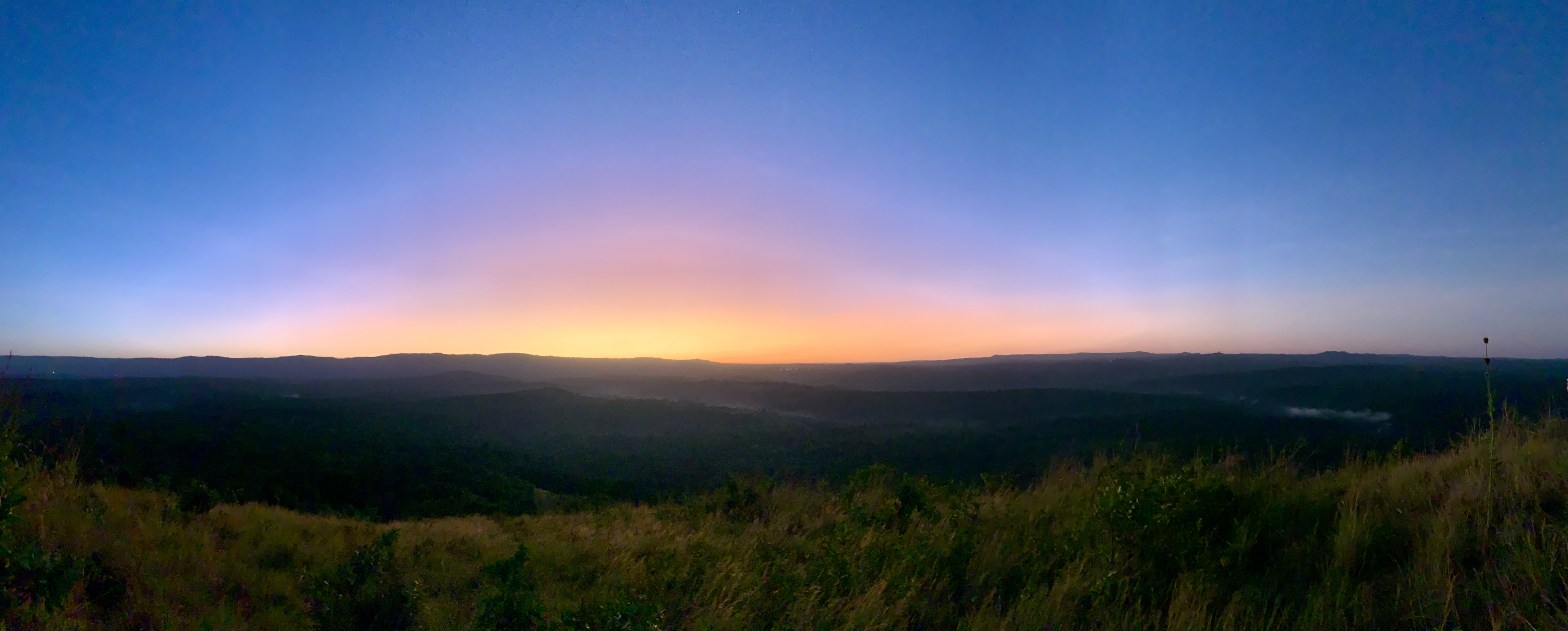
It’s not that it’s a bad question. Because yes, there are days and weeks where witnessing young children die and holding their loved ones as they weep leaves you feeling like a finite piece of porcelain that could crumble to dust at the finest touch. And so yes, I do have a very established set of ‘self-care’ practices that I maintain meticulously throughout every day, regardless of the intensity or mundanity of the events that fill it. Yes, I could tell you about the tangawizi soda that is always in my refrigerator to provide me a surge of cold sugar and biting ginger for the days when you just need to feel your way through the injustice of it all. I could tell you about diligently going to sleep at 9:00 so I can be awake at 5:00 to give myself two full hours of silence as I watch the sun rise with slow sips of coffee, every single morning. I could tell you about how each evening I walk home from the hospital and straight into the shower and then straight to the terrace where I roll out my yoga mat, letting the weight of the day move through me and wash away. I could tell you about the mindful art of slicing fresh mangoes or stirring a pot of curry.
So it’s not that I pretend that I, or any human, am capable of powering through this work without intentional attention to ever-ongoing healing and renewal and the very concrete mechanisms I hold dear for doing so. But it’s that the question often ends there, with a suggestion that caring for myself and making space for something other than that which can be harrowing occurs by myself and for myself and only outside the walls of the hospital. And it is a focus on easily digestible sound bites and simple tips for how to replenish, away from families, so that I can walk in and again become an open vessel for that which is perceived to be only depleting, only draining, only harrowing. The time and space away is important, as a world-renowned introvert I’ll never argue against that, but I bristle against the often unintentional, very subtle implication that that which gives me the ability to stay whole and healthy and happy while doing this work only exists in a dichotomous exterior to the work itself. Because truly, to be able to do this work, to be able to watch children die and not look away but instead draw near, to stand alongside families in what might possibly be among the most painful moments of their time on earth, to kneel down and hold the hand of a child fading away and say ‘we love you, just wait, it won’t hurt soon,’ requires a different, much grittier and far less delineable praxis.
Katie Farris’ poem Why Write Love Poetry in a Burning World begins with ‘To train myself to find, in the midst of hell/ what isn’t hell.’ I have studied years of anthropological theory and palliative care tenets, have learned and practiced methodologies, have had my writing critiqued and edited into PhD standard, have over a decade of experience in care for children. But it is this training in the art of finding, in the midst of hell, what isn’t hell, that I find to be the truly vital practice for my daily life here. Because yes, in this work, you run right up to the thin veil between life and death and are asked to not run from the dark. But also. You get pulled into a room by a mother who wants to show you that, after an amputation she feared and struggled mightily to accept, her son’s cheek dimples have returned in happiness and health. You clap with other parents as a two year old musters the strength to take his first steps. You watch a grandmother dance and sing in the sunlight, celebrating her child’s ability to go home.
But even more than picking out and holding close the evidently, overtly, bountifully joyful moments, (though in the midst of running through a busy day on an overly-crowded ward, to pause to watch a three year old blissfully dancing with their IV pole and meet the eye of his grinning mother is a spiritual practice of the highest art not to be overlooked), your true training comes when you watch a father hold up a phone to his child’s ear and watch tears slowly trail down his cheeks as he hears his mother say goodbye to her grandson. It comes when you watch two mothers of other children on the ward take turns holding the child who, near death, keeps crying out for his mother, whom he has not seen for years, to hold him, as they pick him up, cradle him, and say, “I’m here, I’m here, hush now, I’m here.” It comes when you watch an exhausted father slowly crawl onto the hospital bed next to his son who keeps saying ‘closer, closer’. It comes when you lean down to hear the child, struggling to breathe, and realise he’s whispering that he’d really like to be wearing some blue Crocs. It even comes when a mother alternates between shaking and cradling her daughter’s body saying ‘wake up, wake up, don’t go yet.’
To do this work, you must train yourself not to live among these moments and find a way to simply bear the pain. To do this work, you must train yourself to live among these moments and open your arms wide enough to hold that alongside and around and all muddled up within the depths of pain, there is also capacity to see immense, not unwearying but still continuing, resilience. You must train yourself to find at the very frayed edges of life’s fragility an untidy, nuanced and arduous, not-for-the-faint-of-heart or for the perfect hallmark card, but nonetheless astonishing, human love.
In the past, not knowing how to articulate the enormous complexity of this task, I often merely pushed back against suggestions of this work as harrowing, trying to argue that it is not as hard as many assume. To say that it is only harrowing is simply not true, but just as untrue is to assert that it is never harrowing. Because it can be. There is pain. And it is hard work. But to hold the capacity to do this, and, of critical distinction, to do it well and whole, is not a matter of dichotomising your life between your research inside the experience and those set, simple rituals that heal and sustain you outside it. To do this work you have to train yourself to also find care for your healing and wholeness within it, to look upon your days and see pain, yes, but also see the delicate and weighty privilege of being able to witness the gorgeous and arduous complexity of being alive alongside others. As Katie Farris ends her poem, ‘Why write love poetry in a burning world?/ To train myself, in the midst of a burning world, /to offer poems of love to a burning world.’
So yes, I’ll continue my daily yoga rituals and watch the sun rise with soft and rigorous dedication. But if I can’t grip the arm of the shaking father as I feel my own hands shake and notice how that moment, too, is as wholly and beautifully human as I can ever hope to live, then I will surely lose my capability to offer poems of love to a burning world. So that, that is how I do this work.
 callie daniels-howell
Callie, this is beautifully written 💛💛 Thank you for sharing such poignant thoughts and life lessons. We love you tons! AMY
I admire your courage Callie! It’s amazing to see how you always wake up each day with a smile on your face ready for the day’s activities. you are a sunshine to many of us especially those who are still learning on how to handle death and dying. Love you!
Thank you, Callie. This is helpful in understanding your journey and in learning to live my journey better.