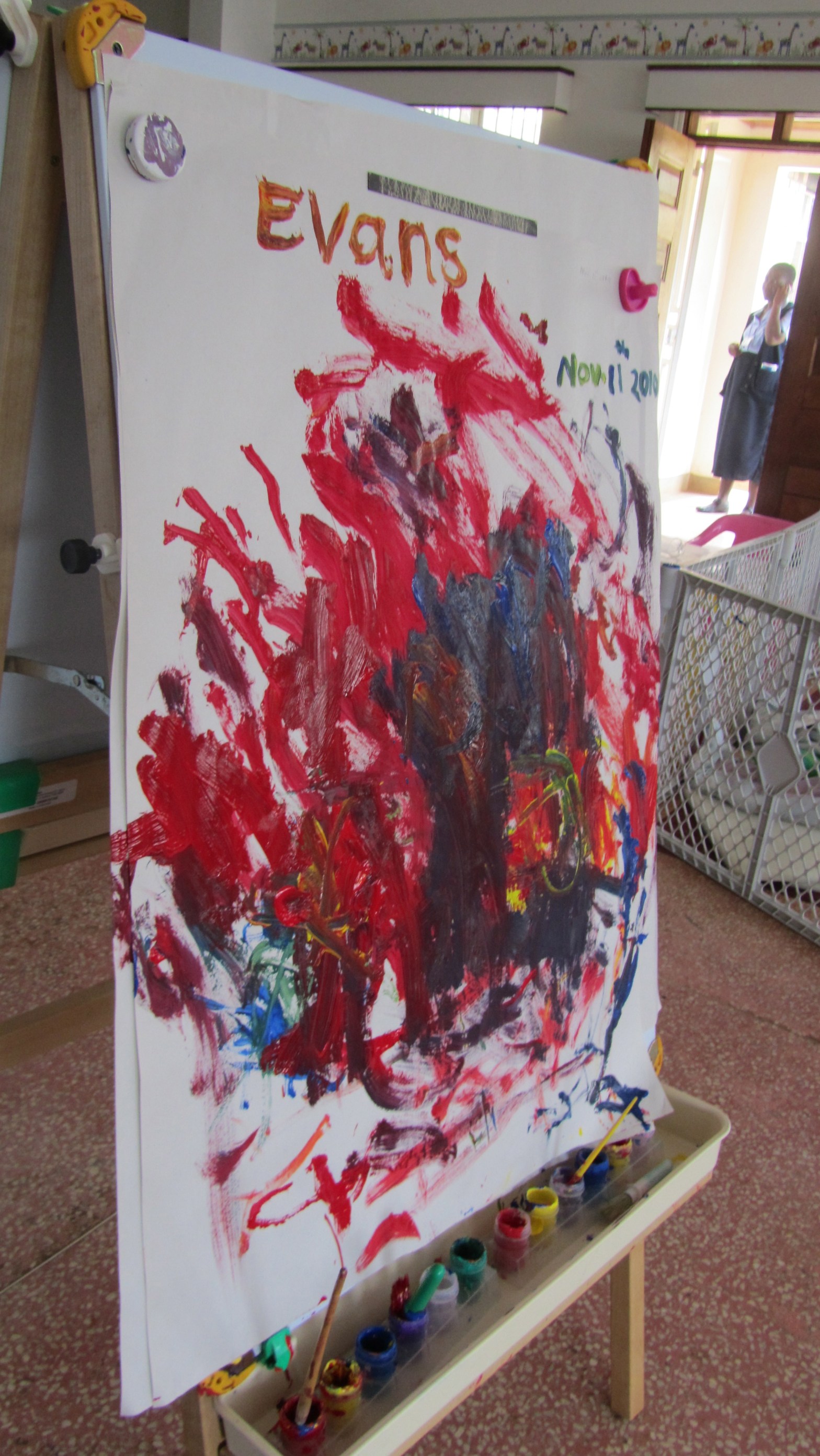
When I officially started writing about my Kenya experiences during my independent study, as I described in my blog ‘i write’, I had the idea that I would independently publish a book. In retrospect, this idea was a little far-fetched. As were my prior ideas of starting a company, opening an art gallery, handcrafting clothing, and curing HIV/AIDS. All of which were, quite sincerely, broached as some of the possible ways to ‘focus’ my independent study.
The book was my only idea that I sort-of followed through on. I wrote two pieces, Evans and Pamelas, which are in no way perfect or exceptionally profound or book-worthy, but of which I am proud simply because of their existence.
When I emailed my mentor with a list of independent publishers and a spreadsheet of bookbinding costs and ‘pledged’ to him that I would “make this really good” (poetic, right?), I was slightly shocked that his reply didn’t include his resignation from mentorship of me. Rather, he replied, saying:
“I will say this – you need to be willing, up front, to be merciless in your writing process. To be really good, you need to be absolutely honest, absolutely objective, hyper-reflective. You can never take it personally and you have to be willing to sacrifice things (writing, stories, etc.) that are personal to you. This is just to say, it’s not an easy process and it takes courage. You have to also be willing to argue for yourself.”
I wrote once that the only time I have ever felt courageous was the day I held Evans, a child I knew was dying, in my arms and held him close. But looking back, I think writing about that day took some courage, too.
In high school, I was never very comfortable with the students in my grade. My closest friends, save for a few, were in the grade above and throughout our four years together I was never able to fully relate to or mesh with my immediate peers. I was never very bothered by this and it didn’t affect my studies until the second semester of my senior year. My best friends had graduated the year prior and were all in throes of the first year college experience and I was returning from Kenya to a school full of what felt like strangers.
Once, our former English teacher, who was also my mentor, spontaneously subbed in for my AP Literature teacher and led a discussion on existentialism. I remember feeling alone in a way which I hadn’t before as my classmates discussed their beliefs on the meaning of life, most of which focused on self-preservation and striving for success, concepts which felt foreign to my newly-learned way of living in the world. I felt so disconnected from them that I completely froze up. There were things I believed and could have said about existentialism. I had arguments boiling up in my head against my classmates who were promoting such a vastly different worldview than I was experiencing at the time. But I didn’t. Couldn’t. I just sat there, silent. Our spontaneous substitute, having taught me previously and knowing from our independent study sessions that I did indeed have plenty to say, asked the question: if the meaning of life is about self-preservation, what about students who choose to sacrifice their traditional senior year to volunteer for children in Kenya?
The question was clearly pointed directly at me and all eyes in the class physically turned toward me, and yet I said nothing. To speak would have been to make myself exceptionally vulnerable. In a room of people who, for the most part, I did not trust to embrace and support me in that vulnerability, I couldn’t summon the courage to speak.
When I first started giving my “10 things I learned in Kenya” presentation, I told my mentor that there was absolutely no way at all that I would ever present to students in my grade. This fear of being vulnerable, of putting so much of my self and my raw, then-incomprehensible emotions on the table for them to witness, stopped me from ever wanted to speak about Kenya with the classmates of whom for so long I had never felt a part.
Gradually I was convinced to give my presentation to the two debate classes, which were comprised primarily of junior and senior students. I didn’t want to do it at all. I was terrified and nervous for what might happen if I was open with my peers in such a way which I never had before. But my mentor and the debate teacher convinced me that the students would learn from my presentation and that facing this fear (which I was never clear if they believed to be common stage fright or if they saw right through me to my true feelings) was a part of the growing process of independent study. So I did it, as much to experience this growth as to follow through on my desire to accept any chance I was given to share stories of Kenya.
Sometimes I wish I could go back to those presentations in the debate classes to discover if I would now interpret and react to the students’ responses to my presentation differently than I did then.
Then, what I experienced was my classmates telling me that while it was sad that kids died, they didn’t plan on losing sleep over it and that they couldn’t understand why they should care about my stories. Then, I left the classroom, found a bathroom, and cried. Then, I went to my mentor’s office and, biting my lip and with cracks in voice, told him that I wouldn’t (couldn’t) ever do it again. Then, I went into a time where I questioned my entire philosophy of storytelling and if anything good could come out of taking the courage to write and to share and to be vulnerable. Then, I saw not speaking, not telling stories, as my own attempt to ‘argue for myself’.
Now, I might see the whole thing differently. But that was then and this is now and the me then is not the me now.
So for me to work tirelessly, producing draft after draft after draft of these two stories was a lot. To share them with my mentor and to be pushed and challenged to not just tell them, but to tell them well, was a lot. To finally, finally allow my closest friends to read them and then to, almost a year later, summon the strength to put these stories on this blog and open them for others to read, was a lot.
And maybe these acts didn’t require the same amount or type of courage that I felt on that beautiful day with Evans. Maybe nothing ever will. But I see now that these were still acts of courage. Now, I might see me deciding to speak again, deciding to keep telling stories, deciding to write, as the true way in which I argued for myself. And each time I write and share that writing with others, I am performing small acts of courage.
And looking back over this writing, I suddenly see that maybe these word spilled onto this page have not so much been about courage at all. Maybe they are rather about being reminded that, by looking at old things in new ways, something can always be learned and growth can always be found. Or maybe it’s about still very much wanting to hold true to my pledge to “make it really good.”
 callie daniels-howell
Callie,
You are so brave and so, so smart. The reflections you share are always so rich. I can’t wait to hear what you think and feel and see and write when you’re in Senegal!
Miss you and love you to the moon and back.
Always,
Kelsey